
Objective
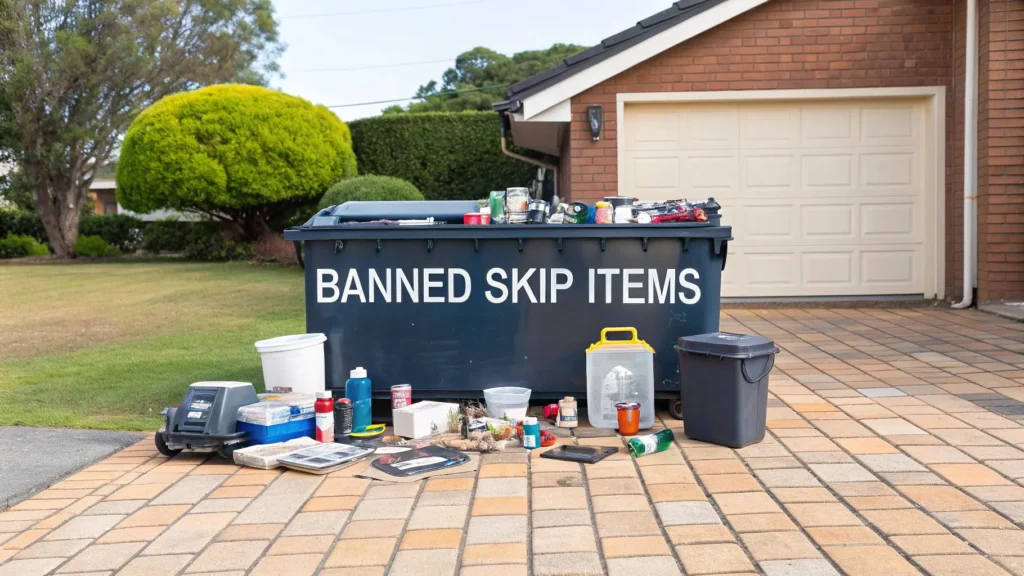
This blog helps UK homeowners understand what cannot go in a skip and why certain items are restricted. It explains safe disposal methods and highlights the importance of following prohibited items that skip UK guidelines.
Key Takeaways
- Knowing what cannot go in a skip helps avoid fines and delays.
- Many prohibited items skip UK rules are linked to safety and environmental laws.
- Hazardous materials require proper hazardous waste disposal UK methods.
- Always check with your skip provider before disposing of unusual items.
Introduction
Hiring a skip is one of the easiest ways to get rid of waste during home renovations, garden clearances, or big clean-ups. However, not everything can simply be thrown into a skip. Many people are unaware of the rules and end up adding items that are not allowed.
Understanding what cannot go in a skip is important not only for legal reasons but also for safety and environmental protection. Skip hire companies in the UK follow strict regulations, and placing restricted items in a skip can lead to extra charges or even fines.
In this guide, we’ll go through the top items you should never put in a skip and what you should do instead.
Top 10 Items You Shouldn’t Put in a Skip
1. Asbestos
Asbestos is one of the most dangerous materials and is strictly banned from skips. It requires specialist handling and certified hazardous waste disposal UK services.
2. Electrical Appliances
Items like fridges, freezers, and TVs cannot usually go in a skip due to the chemicals and components inside them. These should be taken to authorised recycling centres.
3. Batteries
Batteries contain harmful chemicals that can leak and cause environmental damage. They are considered prohibited items skip UK and must be disposed of separately.
4. Paint and Paint Cans
Liquid paint and partially filled tins are not allowed in skips. They can spill and contaminate other waste. Always use proper hazardous waste disposal UK options for these materials.
5. Tyres
Tyres are not accepted in most skips because they require special recycling processes. Many garages or recycling centres accept old tyres.
6. Gas Cylinders
Gas bottles and cylinders can be extremely dangerous if placed in a skip. They can explode under pressure and must be returned to suppliers or disposed of safely.
7. Medical Waste
Items such as needles, medicines, or clinical waste are strictly prohibited. These require specialised disposal services.
8. Plasterboard
Plasterboard cannot always be mixed with general waste due to environmental regulations. Some skip providers offer separate disposal options for it.
9. Chemicals and Solvents
Cleaning chemicals, oils, and solvents are considered hazardous. They should never be placed in a skip and must be handled through proper disposal services.
10. Fluorescent Tubes and Light Bulbs
These contain small amounts of mercury, making them unsafe for general waste. They fall under prohibited items skip UK rules and require safe recycling.
Why These Items Are Restricted
The reason behind these restrictions is simple—safety and environmental protection. Many of these items contain toxic or flammable materials that can harm people, damage equipment, or pollute the environment.
UK waste regulations are strict, and skip hire companies must follow them carefully. That’s why understanding what cannot go in a skip is so important before you start filling one.
What to Do with Prohibited Items
If you come across any restricted items, don’t worry—there are safe alternatives.
You can:
- Take them to local recycling centres
- Use council collection services
- Contact specialist hazardous waste disposal UK providers
- Ask your skip company for guidance
Most providers are happy to advise you on the correct way to dispose of difficult items.
Additional Items to Be Careful With
Apart from the commonly known restricted items, there are a few other things you should be cautious about when using a skip.
Items such as mattresses, carpets, and upholstered furniture may be accepted by some providers but often come with additional charges. This is because they are harder to recycle and take up more space.
Soil and heavy materials like bricks or concrete can also be restricted depending on the type of skip you hire. Some skips are designed specifically for heavy waste, while others are not suitable for these materials.
Food waste is another category to be careful with. While small amounts may be acceptable, large quantities can attract pests and cause hygiene issues.
Understanding these extra restrictions helps you avoid unexpected costs and ensures your skip is used properly.
Tips for Using a Skip Responsibly
To make the most of your skip hire, it’s important to follow a few simple tips.
Always check the guidelines provided by your skip hire company before starting. This will give you a clear idea of what is allowed and what is not.
Try to separate recyclable materials where possible. This helps reduce landfill waste and supports environmentally friendly disposal practices.
Avoid overfilling the skip. Overloaded skips may not be collected, and you could be asked to remove excess waste.
Plan ahead and organise your waste before loading the skip. This saves time and makes the process smoother.
Common Mistakes to Avoid
Many people accidentally include restricted items because they are unsure of the rules.
Common mistakes include:
- Mixing hazardous waste with general waste
- Not checking skip guidelines
- Assuming all household waste is allowed
- Ignoring local council regulations
Avoiding these mistakes can save you time, money, and hassle.
Final Thoughts
Knowing what cannot go in a skip is essential for a smooth and stress-free waste removal process. While skips are convenient, they are not suitable for every type of waste.
By following prohibited items, skipping UK guidelines and using proper hazardous waste disposal UK methods, you can ensure safe and responsible waste management.
If you’re ever unsure, it’s always best to check with your skip hire provider before disposing of any item. It’s a simple step that can help you avoid unnecessary problems and keep your project running smoothly.
FAQs
No, most electrical items are not allowed and should be taken to recycling centres.
Because it is considered hazardous and can contaminate other waste.
You may face extra charges or fines, and the waste may not be collected.
No, chemicals require proper hazardous waste disposal UK services.
No, tyres are restricted and must be recycled separately.
Always ask your skip provider or check their guidelines before use.