
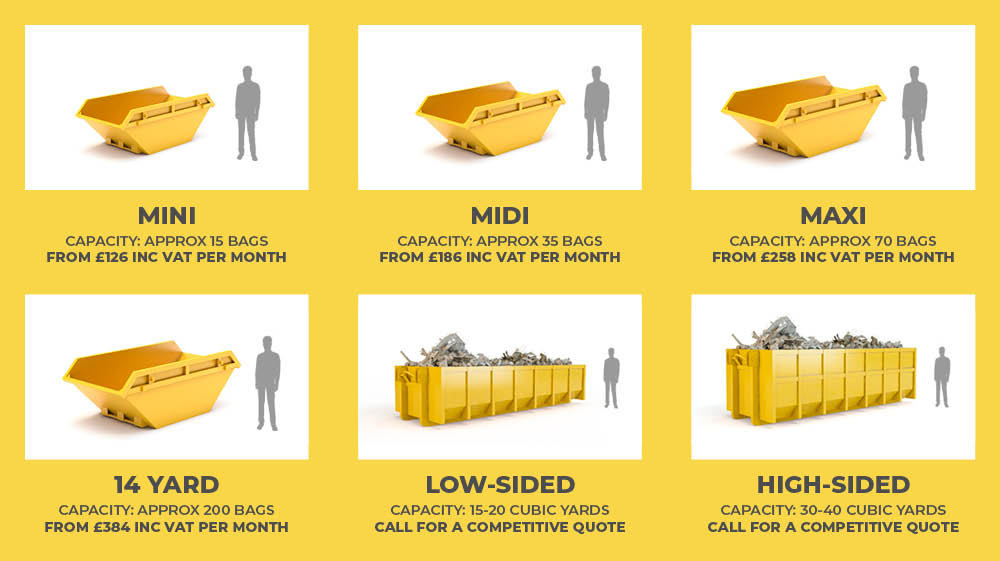
Objective
The objective of this blog is to help homeowners, DIY users, and trade professionals clearly understand why different projects require different skip sizes and how choosing the right skip can prevent delays, extra costs, and common waste‑management mistakes.
By using clear examples and a practical skip size guide, this article aims to simplify decision‑making so readers can confidently hire the right skip for their project the first time.
Key Takeaways
- Skip size depends on both waste volume and weight
- Small projects often need compact skips, not builder sizes
- Large clearances need space planning as much as waste planning
- The right skip saves time, money, and stress
- Guesswork costs more than planning
Introduction
Hiring a skip looks simple until you realise that choosing the wrong size can slow your project down, add extra cost, and cause real frustration.
Every project creates waste, but not every project creates the same waste. A garden tidy‑up produces something very different from a kitchen refit or a full house clearance. That’s exactly why understanding skip sizes matters. A clear skip size guide helps you avoid hiring something too small that overflows halfway through, or something too large that costs more than needed.
Did you know? Industry data from waste carriers shows that a large share of skip hire issues come from people underestimating how much waste their project will produce. Overfilled skips can’t be collected, which leads to delays and extra charges.
This guide will walk you through the reasons why different projects need different skip sizes.
Table of Contents
- Why the Type of Project Sets the Skip Size
- Waste Volume vs Weight: The Part People Miss
- How Skip Dimensions Affect Placement
- Costs, Value, and Smart Planning
- A Simple Comparison Table
- Common Skip Size Mistakes to Avoid
- Frequently Asked Questions
- Choosing the Right Skip Without Guesswork
- Plan Once, Skip the Problems
- Call to Action
Why the Type of Project Sets the Skip Size
Let’s break it down. A skip isn’t just a container; it’s part of your project plan. The kind of job you’re doing shapes how much waste you’ll create and what type of waste it will be.
Light household junk, timber, and packaging take up space but don’t weigh much. Rubble, soil, and concrete don’t take up much space but hit weight limits fast. What this really means is that volume and weight both matter.
Choosing the right skip is about matching the job to the right capacity, not just going for the cheapest option.
Waste Volume vs Weight: The Part People Miss
Many people look at skips and think bigger is always safer. That’s not always true.
Volume
Volume is measured in cubic yards. This is where skip dimensions come into play. A skip might look large on your drive, but it still fills up quickly if the waste is bulky.
Weight
Every skip has a maximum weight. Heavy materials like bricks or soil will reach that limit long before the skip looks full. This is where hiring a skip that’s too large can actually cause problems.
Understanding this balance is at the heart of using a skip size guide properly.
Small Jobs Need Small Skips
Not every project needs a builder skip. In fact, many domestic jobs are better suited to compact sizes.
When a 4 Yard Skip Size Makes Sense
A 4-yard skip size is ideal for:
- Small garden clearances
- Bathroom updates
- Single‑room DIY work
It usually holds around 35–40 bin bags and fits comfortably on most driveways. It’s also easier to load safely and often cheaper to hire.
Here’s a quick real‑world example from one of our customers:
A homeowner clearing a small back garden ordered an 8‑yard skip “just in case.” It filled only halfway, and they paid far more than needed. A 4‑yard skip would have done the job perfectly.
Medium Projects and Builder Skips
This is where many projects land: too big for a mini skip, not quite a full clearance.
Understanding 6 Yard Skip Capacity
The 6-yard skip capacity is one of the most flexible options. It suits:
- Kitchen refits
- Flooring replacements
- Mixed household waste
It handles both volume and modest weight, which is why builders favour it for renovation jobs. It’s also a common answer when people ask what size skip for house clearance of a smaller property.
Used correctly, this size balances cost and practicality better than most.
House Clearances and Large Projects
Clearing a whole house is a different challenge.
What Size Skip for House Clearance Jobs?
This question comes up a lot, and for good reason. What size skip for house clearance depends on:
- Amount of furniture
- Loft and garage contents
- Fixtures and fittings
For full clearances, larger skips often make sense, but access matters just as much as size. If the skip can’t be placed close to the property, loading becomes harder and slower.
Planning here avoids hiring multiple smaller skips, which usually costs more overall. Families clearing a parent’s home often tell us they wish they had planned skip size earlier instead of guessing mid‑project.
How Skip Dimensions Affect Placement
A skip that fits your waste must also fit your location.
Practical Things to Check
- Driveway width and length
- Turning space for delivery vehicles
- Whether a road permit is needed
Larger skip dimensions may require council permission if placed on the road, which adds time and admin. Smaller skips can often sit on private land without permits.
This part is often overlooked, but it affects timelines just as much as waste volume.
Costs, Value, and Smart Planning
Price matters, but value matters more.
Hiring too small often leads to an extra skip later. Hiring too large means paying for empty space. This is where local pricing insight helps.
When people in Essex compare skip sizes and prices, they often notice that jumping up a size costs less than hiring two skips later. This is why planning pays off.
A second key moment where skip sizes prices essex come into play is when waste weight pushes a skip into overage charges. The right size avoids that risk.
A Simple Comparison Table
Below is a quick reference to help match common projects with typical skip choices:
| Project Type | Common Skip Choice | Why It Works |
| Garden tidy‑up | 4-yard skip | Compact, cost‑efficient |
| Kitchen refit | 6-yard skip | Balanced volume and weight |
| Partial house clearance | 6–8 yard skip | Handles mixed waste |
| Full clearance | Large skip | Fewer collections |
Common Skip Size Mistakes to Avoid
We see the same issues again and again:
- Guessing instead of planning
- Ignoring weight limits
- Choosing based on price alone
Using a skip size guide before booking prevents nearly all of these problems.
Another frequent mistake? Ordering late. Poor decisions are made when waste piles up faster than expected. Planning skip size early keeps projects moving smoothly.
Choosing the Right Skip Without Guesswork
This is where everything comes together. The right skip:
- Matches your project scale
- Handles your waste safely
- Fits your site
- Keeps costs under control
Using a reliable skip size guide removes uncertainty and avoids last‑minute stress.
Plan Once, Skip the Problems
Projects don’t fail because of skips, but they can slow down when skip choices are rushed. The right planning makes it easy to choose the right size. It is easier to stay within budget, finish on time, and avoid mistakes when you have a skip size guide.
At Skip Hire Quotes, we see every day how thoughtful planning leads to smoother projects. Whether you’re clearing a room or managing a renovation, the right skip makes all the difference.
Not sure which skip suits your project? Skip Hire Quotes helps you compare options, sizes, and prices from local suppliers so you can choose with confidence. Get your quote today and keep your project moving without paying more than you need.
Frequently Asked Questions
Furniture takes up a lot of space, so larger skips are often needed. Planning access is just as important as volume.
Often yes. A slightly bigger skip costs less than hiring a second one later.
Yes. Overfilled skips cannot be collected, which can halt a project.
They do. Availability and transport affect pricing, especially when comparing skip sizes prices in Essex.