
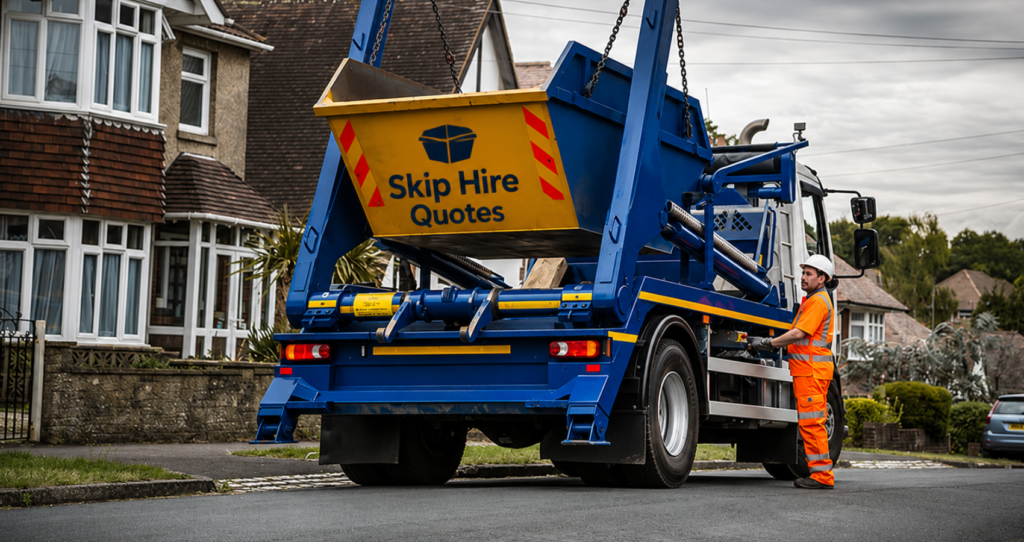
If you’ve landed here searching for ‘how much is a skip to buy‘, you’re in exactly the right place, though there’s a quick distinction worth making upfront. Almost nobody in the UK actually purchases a skip outright. What most people are looking for (and what this guide covers in full) is how much it costs to hire a skip: the standard service where a company delivers the container, you fill it, and they collect it and dispose of the waste, all for a set weekly price.
Think of it like a car. Very few people buy a taxi; they just book one when they need it. Skip hire works the same way, and for the vast majority of homeowners, tradespeople, and businesses, it is far more cost-effective than owning a container outright.
In this guide we’ll walk you through real 2026 UK skip hire prices by size and region, every factor that affects your quote, the hidden costs you need to budget for, and the smartest ways to keep costs down, all backed by verified data so you can plan your project with confidence.
QUICK ANSWER: Skip Hire Costs at a Glance
How much does it cost to hire a skip in the UK? Skip hire costs between £125 and £450 per week depending on size, location, and waste type. A mini 2–3 yard skip averages £125/week; a midi 4–5 yard skip averages £225/week; a builder’s 6–8 yard skip averages £320/week. Permits are required if your skip goes on a public road and typically cost £15–£60. Always compare quotes from at least three local suppliers to get the best price.
What Does It Mean to Hire a Skip?
When you hire a skip, a waste management company delivers a large steel container to your chosen location, you fill it with waste over an agreed period, and the company then collects it and takes care of legal disposal. The price you’re quoted typically covers everything: delivery, the hire period itself, collection, transport to a waste facility, and disposal costs.
This all-in-one service is why skip hire is consistently one of the most cost-effective and popular waste disposal methods in the UK, whether you’re clearing out a garden, stripping a bathroom, or managing a construction site.
| Key point: When you hire a skip, you are paying for a complete waste removal service, not just a steel box. Delivery, collection, and disposal are all bundled into the price. |
How Much Does Skip Hire Cost in the UK in 2026?
The average cost of skip hire in the UK ranges from £125 to £450 per week, depending primarily on the size of the skip you need. Here’s a fast overview before we break things down in detail:
| Skip Size | Capacity | Lower Range | Upper Range | Weekly Average |
|---|---|---|---|---|
| Mini (2–3 yard) | 25–35 bin bags | £75 | £175 | £125 |
| Midi (4–5 yard) | 45–55 bin bags | £130 | £320 | £225 |
| Builder’s (6–8 yard) | 60–80 bin bags | £190 | £450 | £320 |
| Large (10–16 yard) | 90–140 bin bags | £350 | £600 | £475 |
| RORO (20+ yard) | 200+ bin bags | £800 | £1,500+ | £1,000+ |
All prices are per week and are UK national averages. Actual prices vary by location, waste type, and supplier. See the regional breakdown below for more detail.
Skip Hire Costs by Size: What You Need to Know
Mini Skip Hire (2-3 Yard): Average £125 Per Week
The smallest standard skip available, a mini 2–3 yard skip can hold approximately 25-35 bin bags, roughly equivalent to four household wheelie bins or 15 wheelbarrows of waste. It’s the go-to choice for small domestic jobs: spring cleans, garden clearances, single-room clear-outs, and minor DIY waste. Prices typically run from £75 at the budget end up to £175, with a UK average of around £125 per week.
Midi Skip Hire (4-5 Yard): Average £225 Per Week
One of the most popular sizes in the UK, a 4–5 yard midi skip holds around 45-55 bin bags, roughly the amount of waste that fits in a small car with the seats down. It’s the right choice for kitchen and bathroom rip-outs, moderate garden clearances, and smaller house clearance jobs. Expect to pay between £130 and £320 per week, with a UK average of approximately £225.
Builder’s Skip Hire (6-8 Yard): Average £320 Per Week
The workhorse of the skip world. A 6–8 yard builder’s skip holds 60–80 bin bags and is the standard choice for home renovations, construction projects, landscaping work, and larger clearances. Despite the name, it’s widely used by domestic customers too. Prices range from £190 to £450 per week, with the national average sitting around £320.
Large Skip Hire (10-16 Yard): Average £475 Per Week
Large skips in the 10–16 yard range are best suited to full house clearances, commercial clear-outs, office relocations, and larger construction sites where significant volumes of mixed waste need managing. At this size, the skip must be carefully loaded. Mix heavy materials with lighter waste to stay within transport weight limits. Prices typically run from £350 to £600 per week.
RORO Skip Hire (20+ Yard): From £800 Per Week
Roll-on roll-off (RORO) containers are the largest option available, holding 200 or more bin bags and designed for commercial and industrial sites with very high waste volumes. These require specialist hookloader vehicles and are almost exclusively used by businesses. Prices exceed £800 per week and can reach £1,500 or more for the largest 40-yard units.
Factors That Affect Skip Hire Costs
Skip Size: The Biggest Price Driver
As the table above shows, size is the single biggest factor in what you pay. This is logical: larger skips hold more waste, so the company has more to collect, sort, recycle, and dispose of. Each cubic yard of extra capacity adds cost at every stage of the process, from transport to disposal fees.
|
Your Location: The North-South Divide
Where you live has a surprisingly large impact on your skip hire quote. Skip hire prices in London and the South East are consistently higher than in the North of England, Scotland, and Northern Ireland. This reflects the higher operating costs in those areas: wages, fuel, and waste disposal facility fees are all more expensive in and around major cities.
| Skip Size | North | South | London |
|---|---|---|---|
| 2–3 yard (mini) | £65 – £110 | £90 – £150 | £135 – £175 |
| 4–5 yard (midi) | £120 – £240 | £150 – £275 | £220 – £350 |
| 6 yard | £190 – £245 | £210 – £375 | £290 – £400 |
| 8 yard | £250 – £320 | £290 – £360 | £330 – £450 |
Skip hire prices in London can be double what you’ll pay in the North of England for the same-sized container. This is why getting multiple local quotes is so important. Prices can vary significantly even within the same town.
If you’d like to learn more about skip hire prices in Essex, read our complete guide here: Your Complete Guide to Skip Hire Costs in Essex for 2026
Hire Duration: The Longer You Keep It, the More You Pay
Most skip hire companies quote for a standard hire period of 7–14 days. The longer you keep the skip beyond this, the more you’ll pay. If you need a skip for an extended project, discuss this upfront. Some companies offer better rates for longer bookings arranged in advance than for extensions added on at the last minute.
If your skip is on a public road, a longer hire also means permit renewal costs (see below), as most council permits are issued for periods of one to two weeks.
Type of Waste: Not Everything Costs the Same to Dispose Of
Waste disposal costs in the UK are heavily influenced by landfill tax, which as of April 2025 stands at £126.15 per tonne, which is a 38% rise since 2019. Skip hire companies pass this cost directly on to customers, which means heavier, denser waste types cost more to dispose of than lighter, bulkier materials.
Heavy materials like soil, rubble, and concrete fill weight limits very quickly. A skip loaded entirely with rubble may reach its weight limit long before it’s visually full, which is why many companies charge differently for ‘heavy waste’ loads. Green garden waste and general mixed household waste typically sit at standard rates.
There are also materials that are completely banned from standard skips regardless of cost, including:
- Asbestos and hazardous building materials
- Tyres, batteries, and gas canisters
- Electrical appliances (TVs, fridges, microwaves)
- Paints, oils, solvents, and aerosols
- Plasterboard, which must be disposed of separately
- Clinical and medical waste
|
Additional Skip Hire Costs to Budget For
Skip Permits: When You Need One and What It Costs
In the UK, any skip placed on a public road or footpath legally requires a permit from your local council. This is a requirement under the Highways Act 1980, and it applies whether you’ve arranged the permit yourself or your skip hire company handles it. Most reputable companies will organise the permit on your behalf and add the council fee to your final bill.
Council permit fees typically range from £15 to £60, though they can exceed £100 in some London boroughs and busy urban areas. Permits are usually valid for one to two weeks; if you need your skip longer, an extension can normally be arranged for an additional fee.
You do not need a permit if the skip is placed entirely on private land: your own driveway, garden, or a private car park. If you have the space to keep the skip off the road, this is always the simpler and cheaper option.
|
Lockable Skips: Extra Security at Extra Cost
A standard open-top skip has no security, so anyone can add waste to it (or remove items from it). If you’re concerned about waste being dumped by others, or if you’re disposing of materials that need to stay dry or secure, a lockable skip is worth considering. These typically cost an extra £50–£150 on top of standard hire rates, depending on size.
Overfilling Penalties
Skips must be filled no higher than the rim. This is a legal and safety requirement for road transport, not a company policy. If your skip is overfilled when the driver arrives to collect it, they can legally refuse to take it until the excess waste is removed. In some cases you may also face an overfilling surcharge. If you think you might run out of space, ordering a slightly larger skip upfront is always the more cost-effective solution.
How to Choose the Right Skip for Your Project
Matching Skip Size to Your Job
The most common mistake in skip hire is underestimating how much waste a project will generate. Here’s a practical size guide to help you get it right the first time:
| Project Type | Recommended Skip Size | Why |
|---|---|---|
| Weekend garden tidy | 2–3 yard mini | Handles typical green/garden waste volumes |
| Kitchen or bathroom rip-out | 4–5 yard midi | Balances capacity and driveway footprint |
| Full home renovation | 6–8 yard builder’s | Standard for construction site waste |
| House clearance | 8–12 yard | Enough capacity for furniture plus general waste |
| Commercial/office clear-out | 12–16 yard+ | High-volume light waste; verify weight limits |
| Ongoing commercial site | RORO (20+ yard) | For continuous industrial or demolition waste |
Thinking About Weight, Not Just Volume
A common trap is ordering a skip based on size alone without thinking about the weight of what you’re putting in. As a general rule, each cubic yard of capacity corresponds to roughly one tonne of waste. A 6-yard skip, for example, has a weight limit of approximately 6 tonnes. Fill it with heavy rubble and you may hit that limit when it’s only half visually full, meaning you can’t add more waste and haven’t used the space you paid for.
If your waste is predominantly heavy, such as soil, concrete, bricks or tiles, stick to smaller skips (4–8 yard) that can be safely loaded to their weight limit with dense materials. For lighter, bulkier waste like furniture, wood and packaging, you can use larger skips more efficiently.
How to Save Money on Skip Hire
1. Get Multiple Quotes
This is the single most effective thing you can do. Skip hire prices can vary significantly, sometimes by 30 to 40 per cent, even between companies in the same area. Getting at least three quotes before booking gives you a realistic picture of local market rates and genuine negotiating power. Use a comparison service like Skip Hire Quotes to get competitive quotes from vetted local suppliers quickly.
2. Place the Skip on Private Land if You Can
Keeping your skip on your own driveway or garden avoids the permit fee entirely, saving you £15–£100 depending on your council area. It also avoids any permit-related delivery delays, as companies don’t need to wait for council approval before dropping the skip.
3. Be Clear About What You’re Disposing Of
If you have a mix of waste types, separating them before booking could save money. Certain materials, particularly plasterboard, electrical items and hazardous waste, cannot go into a standard skip and require specialist disposal. If these are mixed in with general waste and found at the point of collection, you may face additional charges. Knowing exactly what you have upfront allows your supplier to quote accurately and helps you avoid unexpected fees.
4. Book the Right Size First Time
Underestimating your waste volume and needing a second skip is one of the most common and most avoidable additional costs in skip hire. A second delivery and collection means paying the full hire fee again plus transport costs. If you’re on the fence between two sizes, the larger one almost always works out cheaper overall.
5. Return the Skip as Soon as It’s Full
Extended hire periods add cost, and if your skip is on a public road, each week of extension also means a permit renewal. Once your skip is full and your project is complete, call your supplier to arrange early collection. Many companies are flexible and will collect ahead of the agreed end date.
6. Consider Sharing with a Neighbour
If a neighbour is also undertaking renovation or clearance work at the same time, sharing a single larger skip and splitting the cost can produce significant savings for both parties. One 8-yard skip is consistently cheaper than two 4-yard skips, and reduces the number of lorry journeys, which is better for your street as well as your budget.
Buying vs Hiring a Skip: Which Makes More Sense?
Since many people arrive at this page asking specifically about buying a skip, it’s worth addressing this directly. Purchasing a skip outright in the UK costs between £400 and £3,000 depending on size and condition. However, owning a skip means you must arrange and fund waste disposal separately every time it needs emptying. At current landfill tax rates of £126.15 per tonne, this can cost £150–£400 per collection on top of the container purchase price.
For the vast majority of people, including homeowners, tradespeople on individual projects and small businesses, hiring consistently works out more economical. You pay one all-inclusive price, with no capital outlay, no disposal logistics, no maintenance costs, and no storage to arrange.
|
Where to Find Reliable Skip Hire Near You
Finding the right skip hire company doesn’t have to be complicated, but it does pay to be thorough. Here’s what to look for when choosing a supplier:
- Check they are registered as a licensed waste carrier with the Environment Agency. This is a legal requirement for any company that collects or transports waste.
- Ask about their recycling rate. Reputable companies recycle over 80% of the waste they collect; some achieve more than 90%. This matters both environmentally and because higher recycling rates reduce landfill tax exposure.
- Confirm whether the quoted price includes VAT, permits, and disposal, or whether these are charged separately. A lower headline price can quickly become more expensive once extras are added.
- Check their reviews. Customer feedback on timely delivery, clear communication, and accurate pricing tells you a great deal about what to expect.
- Get at least three quotes and compare the total cost, not just the weekly hire rate.
Final Thoughts: Getting the Best Skip Hire Deal in 2026
Skip hire remains one of the most straightforward and cost-effective ways to manage waste in the UK, whether you’re a homeowner tackling a long-overdue clear-out or a contractor managing ongoing site waste. The key to keeping costs down is simple: choose the right size the first time, place the skip on private land where possible, know exactly what you’re putting in it, and compare at least three quotes before committing.
Prices across the UK range from £125 to £450 per week for standard skip sizes, with significant variation by region. London and the South East are consistently more expensive than the Midlands and the North. Getting local, competitive quotes is the most reliable way to ensure you’re paying a fair price for your area.
Bottom line: Whether you’re searching ‘how much is a skip to buy’ or ‘how much does skip hire cost’: for 99% of people, hiring is the right answer. It’s convenient, it’s fully managed, and it’s almost always the most cost-effective route. Compare quotes today and get the best deal in your area.
Get Competitive Skip Hire Quotes, Instantly
Compare prices from trusted, vetted skip hire companies in your area. Takes less than 2 minutes. No obligation.
Order Skip Online at Skip Hire Quotes
Call us: 808-239-7783
FAQs About Skip Hire Costs
Skip hire in the UK costs between £125 and £450 per week for standard domestic sizes. A mini 2–3 yard skip averages £125/week, a midi 4–5 yard skip averages £225/week, and a builder’s 6–8 yard skip averages £320/week. Prices vary based on your location, the type of waste, and the hire duration. Council permits add a further £15–£60 if the skip is placed on a public road.
For almost all domestic and most commercial users, hiring is significantly cheaper. When you hire, delivery, collection, and disposal are all included in one price. When you purchase a skip outright (£400–£3,000), you must then pay for waste disposal separately every time it’s emptied. Unless you’re running a skip hire business and will use the containers hundreds of times, buying rarely makes financial sense.
A 4–5 yard midi skip is the most popular choice for kitchen renovations, holding approximately 45–55 bin bags of waste. It costs around £225 per week on average and fits comfortably on most standard driveways. If you’re also removing heavy tiles or concrete, consider a 6–8 yard builder’s skip to give yourself more capacity.
You only need a permit if the skip will be placed on public land: a road, pavement, or public car park. Under the Highways Act 1980, this is a legal requirement. Permits are issued by your local council and typically cost £15–£60. Your skip hire company will usually arrange this for you and add the fee to your invoice. If your skip can go on your own driveway or garden, no permit is needed.
Most companies include a 7–14 day hire period in their standard price. You can usually extend beyond this for an additional daily or weekly fee, and most companies will collect early if you’re done ahead of schedule. If you know in advance you’ll need the skip for longer than two weeks, mention this when booking. It is often cheaper to arrange a longer hire upfront than to add extensions after the fact.
Banned items include asbestos, tyres, batteries, electrical appliances (TVs, fridges, washing machines), paints, oils and solvents, gas canisters, and plasterboard (which requires separate disposal). If any of these are found in your skip after collection, you may face additional disposal charges. Most of these items can be taken to your local household waste recycling centre free of charge.